Building Claro's first scalable AI personalization capability — and killing the feature that tested badly
As Product Designer and Product Owner, I translated machine-learning outputs into a content-discovery experience users could actually understand and trust — choosing clarity over novelty when the data demanded it.
Outcomes
Result: Launched 3+ reusable recommendation APIs and a new discovery experience — Claro's first scalable AI personalization capability — reused across multiple products.
My role: Owned product definition and UX as Designer + PO. Ran usability testing that killed a gamified concept in favor of a clear, predictable experience — an evidence-based call.
Business impact: Created a reusable AI-UX framework that informed Claro's long-term roadmap and AI investment decisions, and reduced reliance on manual content curation.
TL;DR
Business goal: Enable scalable, AI-driven content discovery and reduce reliance on manual curation across Claro's ecosystem.
What I did: Co-led product definition and UX for an AI recommendation platform — and cut a tested-but-confusing gamified concept in favor of clarity.
Outcome: 3+ reusable recommendation APIs and a new discovery experience that became Claro's first scalable AI personalization capability.
Context & Business Goal
Claro Brazil is one of the country’s largest telecom providers, offering mobile, broadband, and digital entertainment services to millions of users.
As content volume increased, existing discovery experiences relied heavily on manual curation and static logic, limiting scalability and personalization. The company began investing in artificial intelligence and machine learning to recommend video and music content more effectively.
Business goal: Operationalize AI-powered recommendations so content discovery could scale across products, attract new users, and reduce manual effort.
The Challenge
The initiative faced several interconnected challenges:
Content discovery experiences were mostly static and rule-based
AI and ML capabilities existed at a technical level, but were not clearly surfaced to users
No unified experience to showcase or consume recommendation APIs
High risk of building “black-box” AI experiences users wouldn’t understand or trust
Need to balance experimentation with usability in a high-visibility product
This was not just a design problem — it required aligning UX, product strategy, and data science around how AI should behave in real user experiences.
Key Constraints
Early-stage AI models with evolving accuracy
Dependency on external APIs and data pipelines
Multiple stakeholders across data, engineering, and product
Limited historical benchmarks for AI-driven UX within the company
Need to support reuse across multiple products, not a single surface
My Role
I worked as both Product Designer and Product Owner within Claro’s Smart Content innovation team.
My responsibilities included:
Defining MVP scope and priorities for AI-driven recommendations
Translating machine learning capabilities into user-facing flows
Leading UX discovery and interaction design
Facilitating alignment between data scientists, engineers, and product leadership
Making product decisions around explainability, usability, and risk
Supporting validation, iteration, and post-launch learning
Discovery & Insights
1. Stakeholder & Domain Discovery
I collaborated with stakeholders to understand:
What problems AI was expected to solve
What data was available and reliable
How recommendations could support business goals
Where automation made sense — and where it didn’t
This helped frame AI as a decision-support and personalization tool, not just a technical feature.
2. Journey Mapping & Competitive Analysis
I mapped the end-to-end content discovery journey and analyzed competitor platforms using AI recommendations.
Key insights:
Users needed clarity on why content was recommended
Overly complex or playful interactions reduced trust
Discovery experiences worked best when recommendations felt contextual, not random
Clear hierarchy and framing mattered more than novelty
3. Early Concept Validation
We explored multiple interaction concepts, including an experimental game-based discovery experience where users could find new content through preference-driven interactions.
Usability testing revealed that:
Users struggled to understand the game mechanics
The experience distracted from content rather than supporting discovery
Trust and predictability were more important than innovation
This led to a critical product decision: simplify the experience and prioritize clarity over experimentation.
Experience Principles for AI Recommendations
Clarity over novelty
AI recommendations should be easy to understand, not surprising or confusing.
Explainability matters
Users need context around why content is being suggested.
Scalability by design
The experience must support reuse across products and content types.
Human-centered AI
Machine learning outputs should adapt to users, not dictate behavior.
Progressive enhancement
AI should improve the experience without breaking baseline usability.
Design Solutions
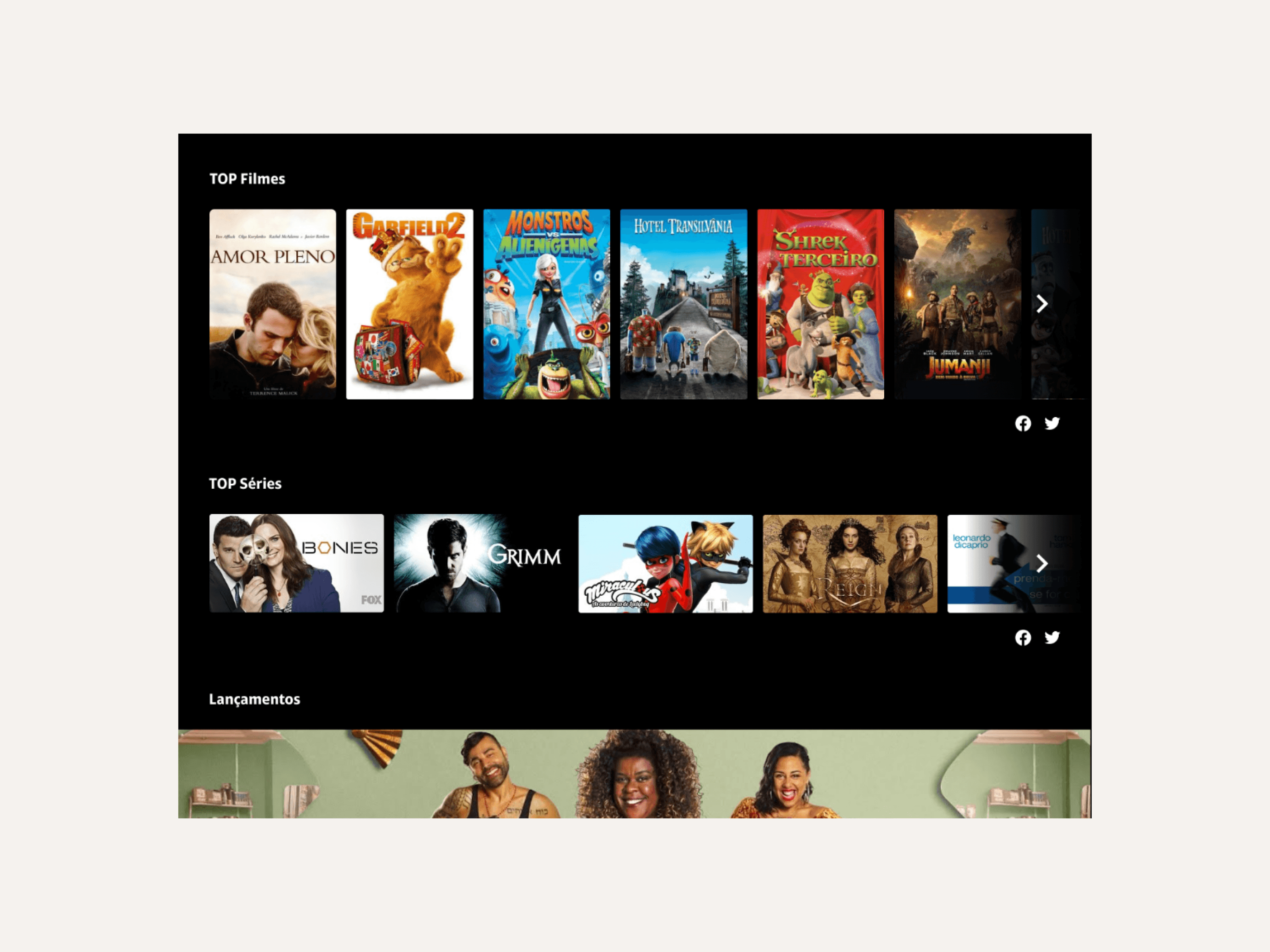
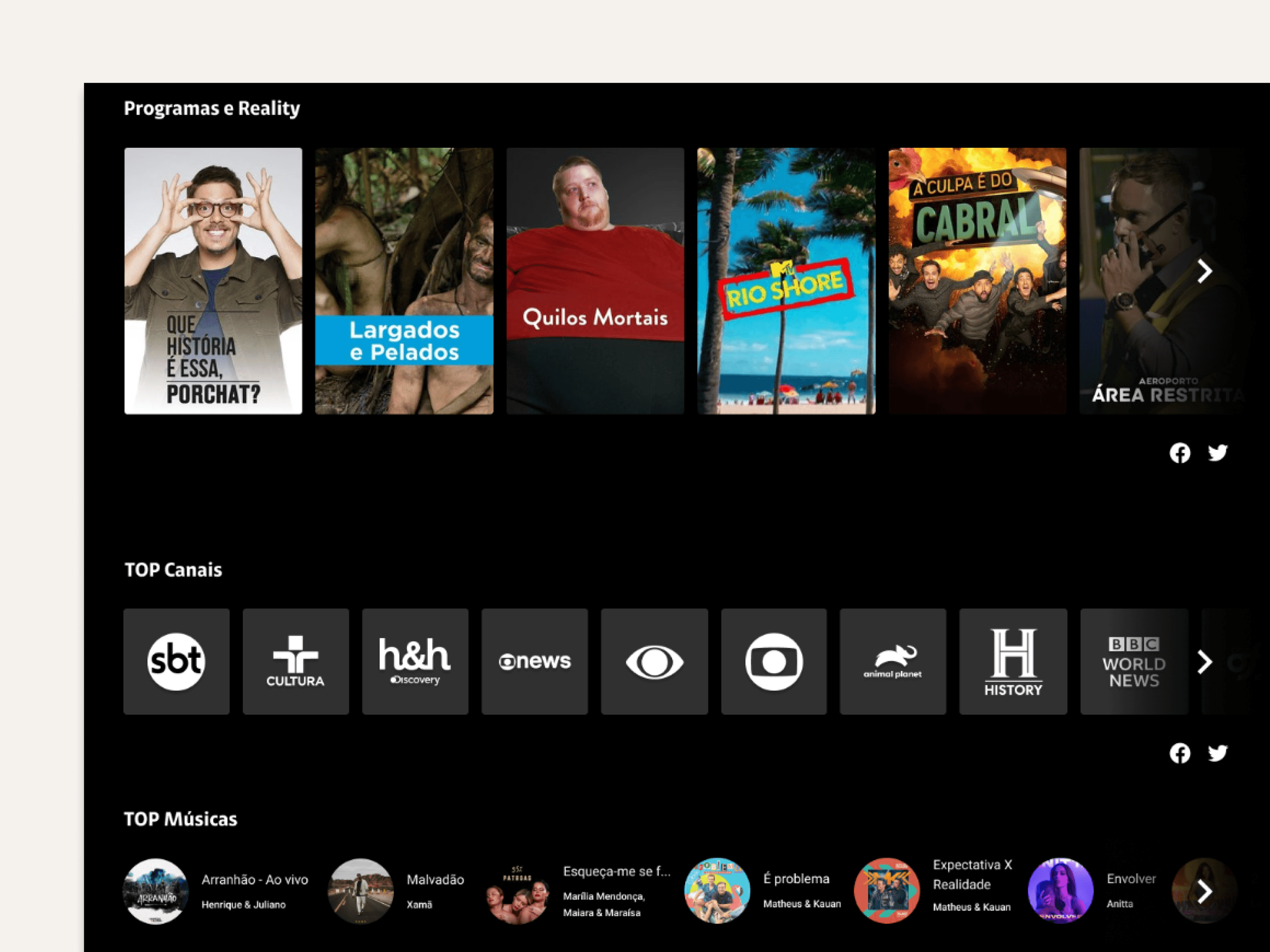
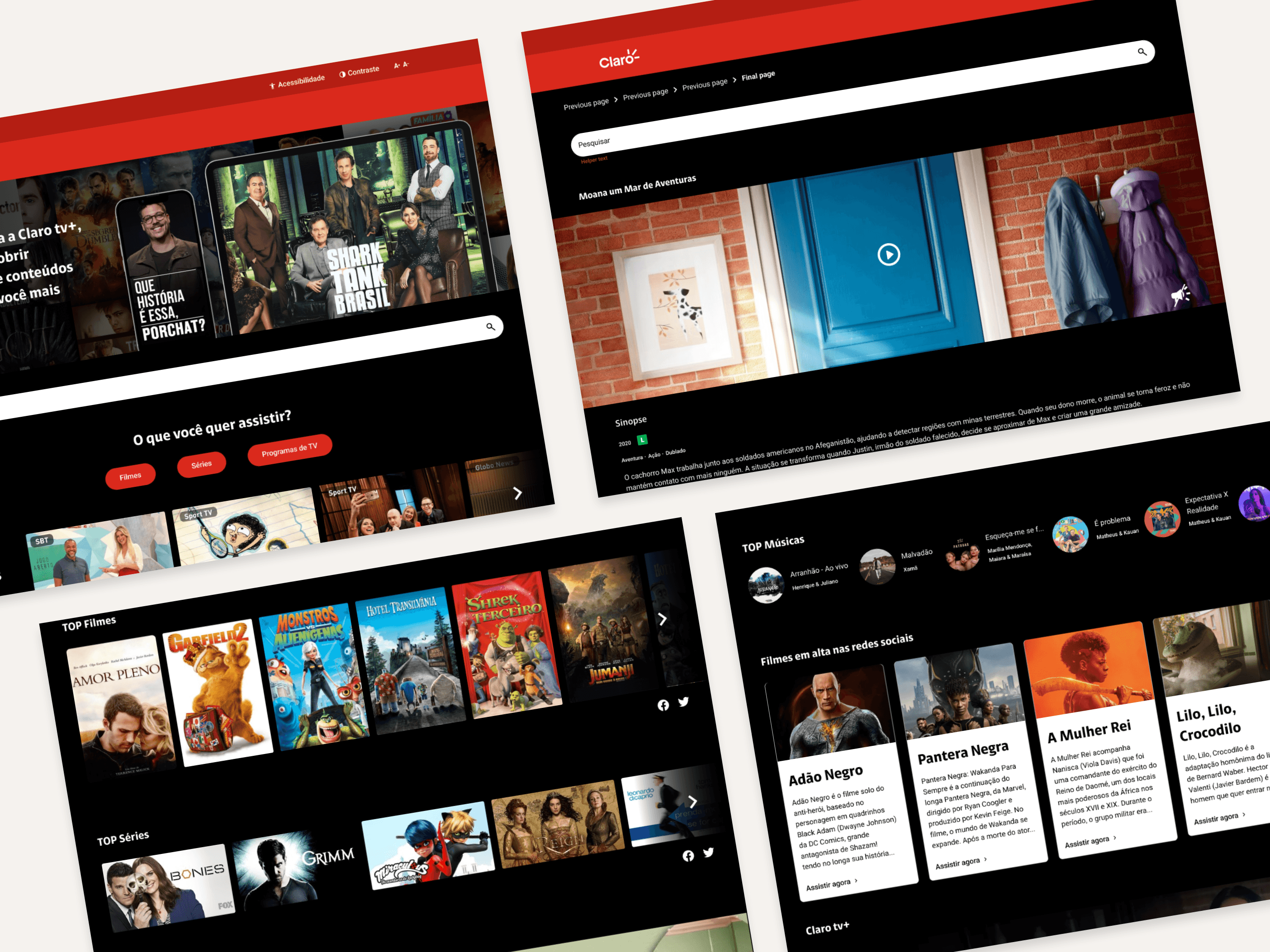
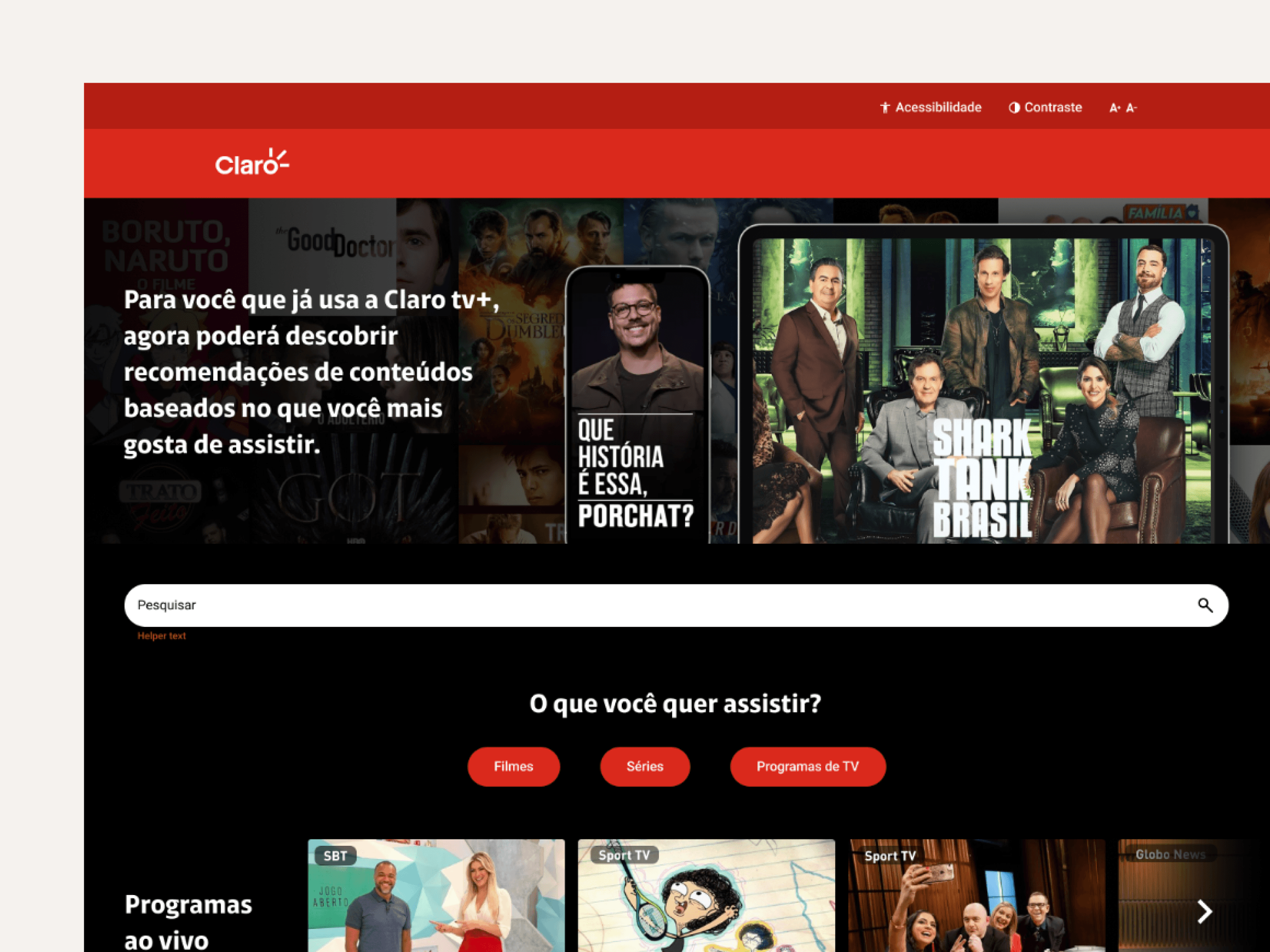
Recommendation Experience Redesign
I redesigned the recommendation surface to:
Reduce the number of screens and interaction steps
Present AI-driven content in a clear, structured hierarchy
Guide attention with strong calls to action
Support responsive behavior across devices
Align with Claro’s design system for consistency and scalability
The interface used a cinema-inspired visual language to reinforce content value while keeping interaction patterns familiar and predictable.
AI-to-UX Translation
A key part of the work was translating ML outputs into UX decisions:
Defining how recommendations were grouped and prioritized
Designing fallback states for low-confidence predictions
Ensuring the experience remained usable even when AI signals were weak
Supporting future experimentation without redesigning the UX
Collaboration & Dev Alignment
I worked closely with:
Data scientists to understand model behavior and limitations
Engineers to ensure technical feasibility and performance
Product leadership to align AI investment with business strategy
This collaboration helped turn abstract AI capabilities into a concrete, shippable product experience.
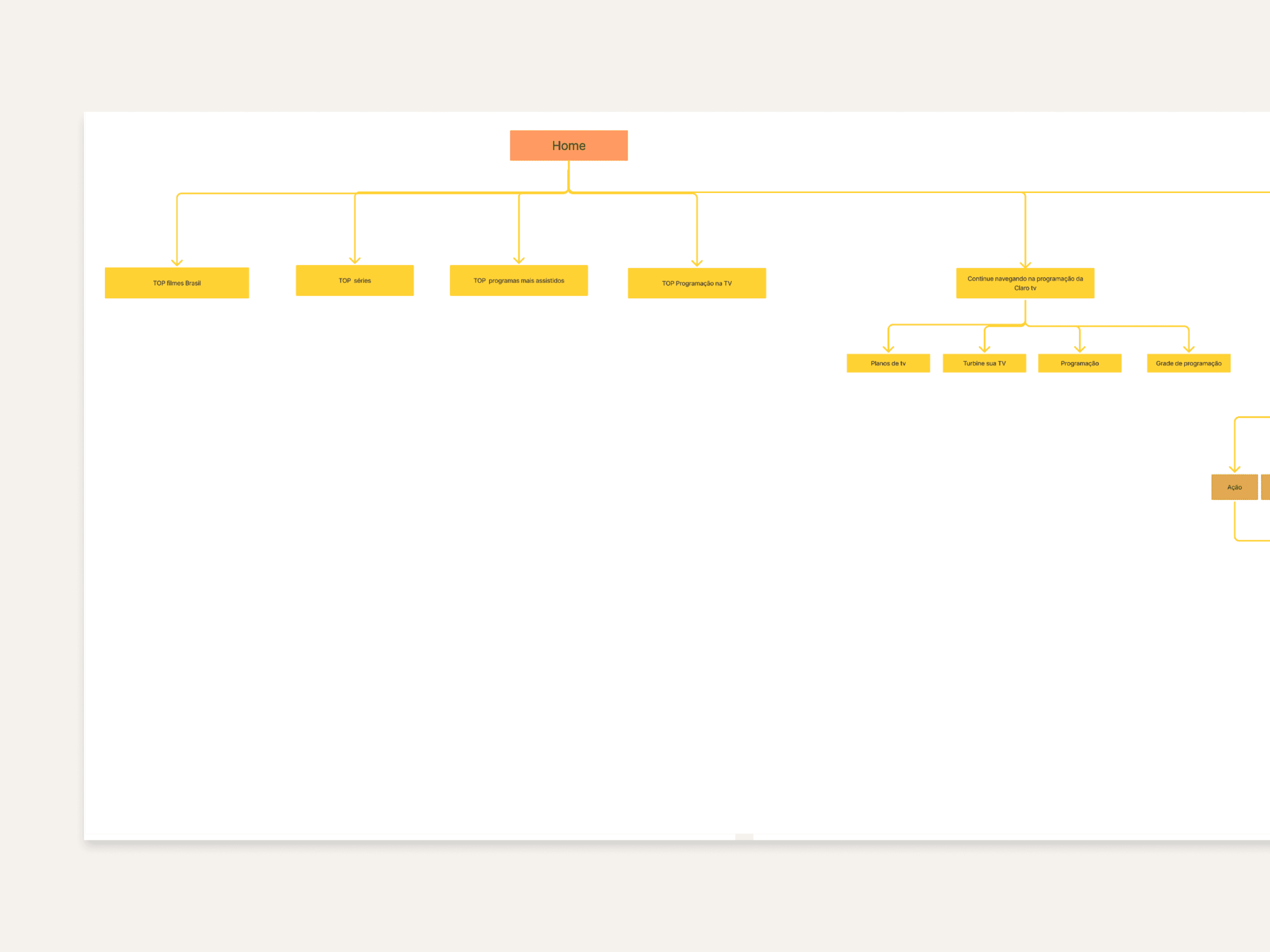
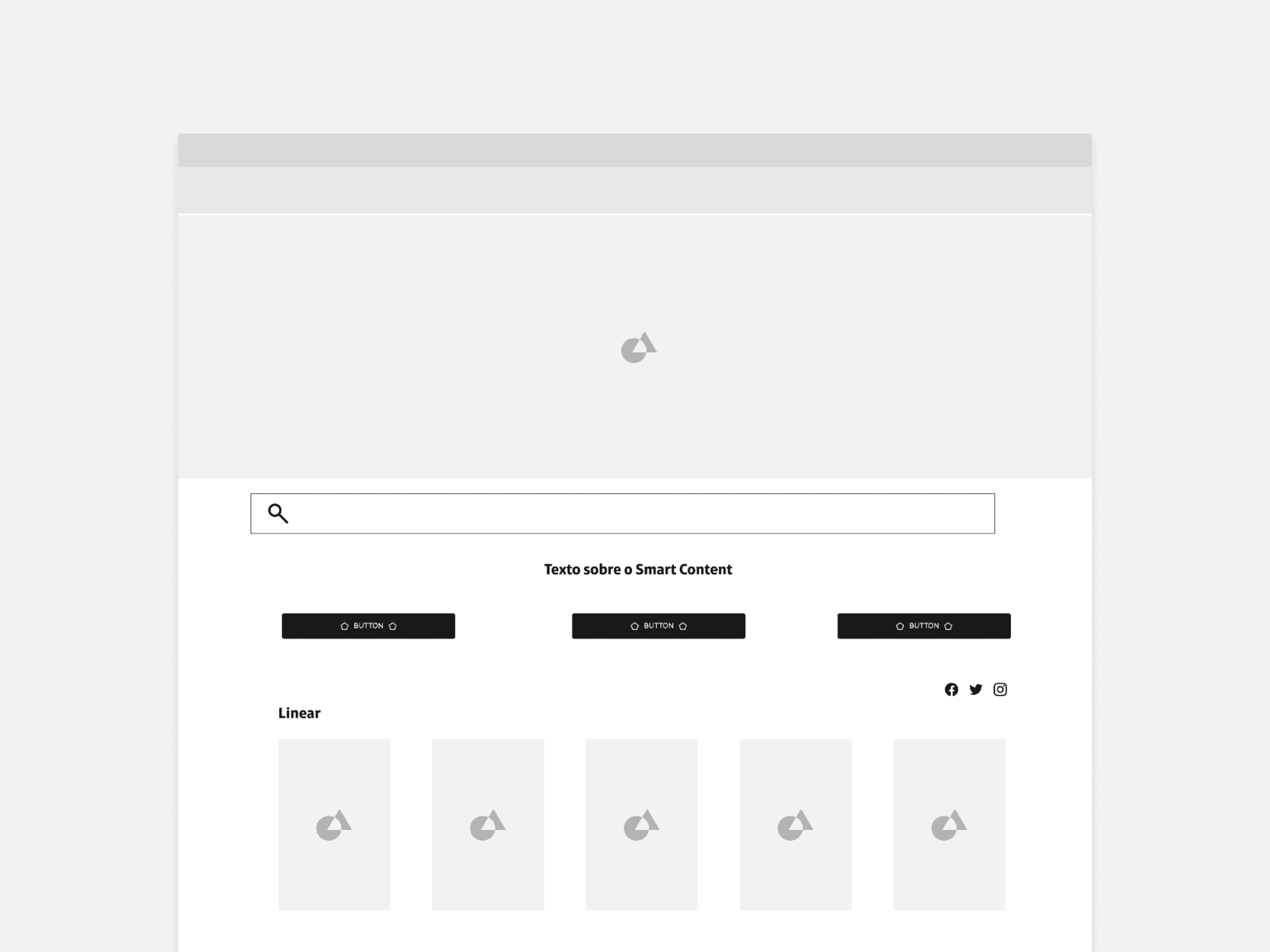
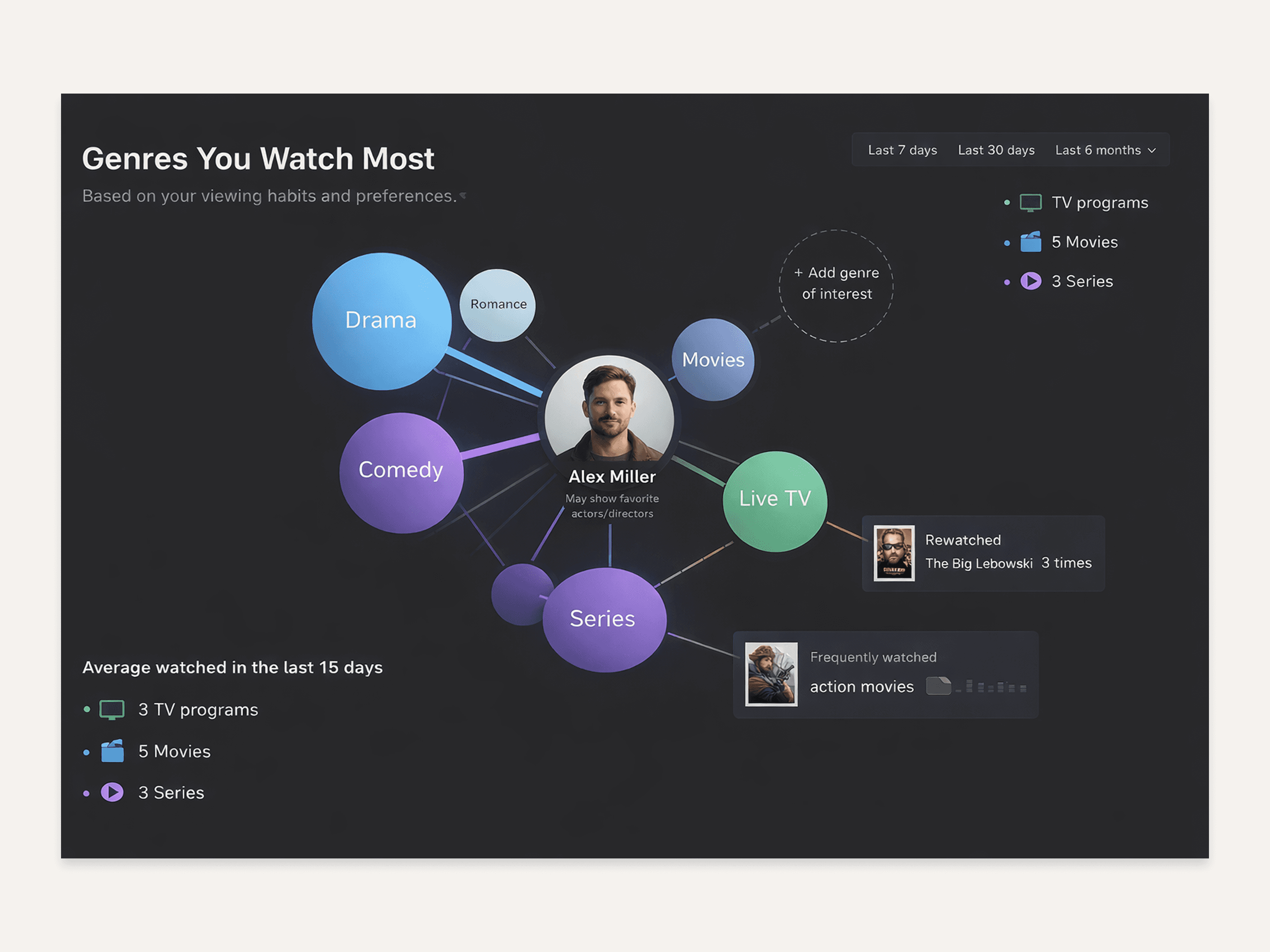
Images: Information architecture, wireframe and AI persona study:
Validation & Iteration
Post-launch, we monitored:
Usage patterns and qualitative feedback
Stability and reuse of recommendation APIs
Opportunities for iteration and expansion
The work focused on learning and capability building, rather than short-term optimization.
Impact & Outcomes
Enabled the creation of 3+ AI-powered recommendation APIs reused across multiple Claro products
Established Claro’s first scalable AI-driven personalization capability
Reduced reliance on manual content curation
Created a reusable UX framework for future AI features
Improved collaboration between design, product, and data science teams
Informed long-term roadmap decisions around AI experimentation and investment
Reflection
This project demonstrates how AI product success depends on clarity, trust, and system thinking, not just model performance.
It highlights experience designing at the intersection of UX, product ownership, and machine learning, where the goal is to make AI useful, understandable, and scalable — not just technically impressive.